
"soft acidity"
8000 article(s) found

Soft acidity Ethiopian coffee flavor Taste Manor Features
Ethiopia's coffee producing areas are Sidamo, Harrar and Yirgacheffe. Sidamo and Harrar are provinces and divisions. Sidamo is located in the south of Ethiopia and adjacent to Kenya. Harrar borders Somalia in the east of Ethiopia. Although Yirgacheffe is a small area in Sidamo region, due to soil composition and water content, etc.

Coffee has soft acidity and attractive aroma in Tanzania.
Gourmet coffee has soft acidity and attractive aroma, which is absolutely worth enjoying. Coffee exports from Tanzania (Tanzania) play an important role in the whole national economy. Bean-shaped berry coffee is very productive and is said to be more fragrant than ordinary coffee. Generally speaking, the coffee beans in Tanzania have an extraordinary quality. For example, in the neighborhood of Kilimanja
What coffee beans are produced in Tanzania? Tanzania coffee is sour and unsour with strong texture and soft acidity.
Professional coffee knowledge exchange more coffee bean information please follow the coffee workshop (Wechat official account cafe_style) front street-Tanzania Coffee introduction Tanzania's full name is the United Republic of Tanzania, the geographical location is south of the equator in eastern Africa, the world-famous East African Rift Valley divides into east and west branches from Lake Malawi to the north and south. The whole terrain is high in the northwest and low in the southeast.
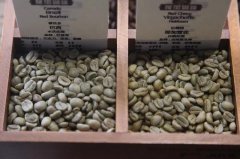
How to bake coffee, soft beans and hard beans? What are the roasting techniques for coffee beans with different densities? What is it?
Professional coffee knowledge exchange more coffee bean information please follow the coffee workshop (Wechat official account cafe_style) coffee soft beans and hard beans how to bake? What are the roasting techniques for coffee beans with different densities? What's the difference in taste? Hard bean coffee is coffee that grows at a relatively high altitude, while coffee grown at a lower altitude is generally considered soft bean coffee. Higher altitude and

How to buy coffee beans from all over the world
Professional barista exchanges, please pay attention to coffee workshop (Weixin Official Accounts cafe_style) Latin America has beautiful layer changes, excellent alcohol degree, fine fruit acid Latin America Mexico, Guatemala, Honduras, El Salvador, Nicaragua, Costa Rica, Panama,

Characteristics of grinding degree of Ethiopian coffee with soft acidity introduction to flavor description of varieties
Grade of Ethiopian coffee: Ethiopian washed coffee Yega Chuefei G1 G2 Sidamo (Yirgacheffe, Sidamo) has the highest grades 2 and 3 (G2, G3), while sun-processed coffee in eastern Ethiopia is mostly grade 4 or 5 (G4, G5). In many cases, level 4 coffee is marked as level 5 in order to reduce taxes. At present, the classification is not uniform and there are

Soft acidity of Tanzanian coffee flavor taste manor characteristics of boutique coffee beans
Over the years, China has helped Tanzania implement a large number of economic aid projects, the most famous of which is built by Chinese capital, personnel and technology. Imports from China already account for 15% of Tanzania's total imports. China is playing a more and more important role in the future development of Africa. China's assistance to the economic development of Tanzania is a good example. I believe that in the near future

Introduction to Nicaraguan Coffee Manor with soft citrus acidity
The planting conditions in Nicaragua are not inferior to those in Central American countries. Shaded coffee is grown at high altitudes. It tastes round and balanced with less sharp acid. The main unknown factor is war and hurricanes, which make a single farm unsustainable. There is no historical data for raw bean merchants to track and check farm data until after 2003, the bad factors of coffee quality are removed and backward intercourse.

Roasting adjustment and extraction adjustment of raw coffee beans what are the effects of soft and hard water on the extraction of coffee
98% of coffee is water, while 94-95% of a cup of espresso is water. So, in the whole coffee equation, water is an extremely important ingredient. In many cases, it is always ignored, so does the roasting and extraction of coffee also need to be adjusted in different drinking environments? How does water quality affect the taste of coffee? Water is

Columbia Linglong Coffee name Source _ soft and translucent Colombian Nalinglong Coffee
Professional coffee knowledge exchange more coffee bean information please follow the coffee workshop (Wechat official account cafe_style) ★ becomes the cup of coffee you want to taste every day ★ really began to understand the characteristics of Colombian coffee ★ soft and translucent acidity, smooth touch and nutty chocolate lingering in southern Colombia, west Ecuador, north and another

Introduction to the characteristics of Tanzania coffee flavor description with soft and bright acidity
Tanzania is an East African country south of the equator, bordered by Uganda and Kenya to the north and the Republic of the Congo, Rwanda and Burundi to the west. It is hot and humid all the year round, with an average temperature of 21-25 ℃ in most areas. Precipitation is divided into long and short rainy seasons, and the annual precipitation is abundant. The economy is based on agriculture, coffee is one of the main cash crops in Tanzania, in Tanzania, Arabica coffee

Soft acidity of Yega Chefevoca Coffee Flavor description method of Grinding method Manor introduction
Yejia Xuefei, nearly 2,000 meters above sea level, is one of the highest coffee producing areas in the world. Here has been a wetland since ancient times, Yirga means to settle down, Cheffe means wetland, Lake Turkana, Lake Abaya, Lake Chamo bring rich water vapor here. The rift valley, represented by Misty valley, is foggy all the year round, like spring all the year round, with a gentle breeze.

Description of soft Rwandan Coffee Flavor Variety characteristics of Fine Coffee beans
[product name]: Rwanda bourbon boutique coffee (Rwanda Bourbon Specialty) [quality rating]: AA [roasting degree]: recommended roasting degree city or deep city roasting (City Roast or Full City Roast) [grade]: good [granule]: ★★ full [acidity]: ★★★ micro acid [equilibrium]: ★★★ stable [flavor]: soft

There is a light milky aroma and elegant floral aroma, the introduction of Puerto Rican coffee with fine and soft acidity.
The Caribbean Sea is a warm, romantic and mysterious sea, and a lot of good coffee is also around this ring sea, such as the Blue Mountains of Jamaica, Dominica, Crystal Mountain of Cuba, Yuko of Puerto Rico and so on. These are the most famous rare and expensive coffee in the world. These island beans give people a light smell of milk and elegant flowers, delicate and soft acidity, although it is still difficult to avoid coffee caused by the island's muggy climate.

There is a light milky aroma and elegant floral aroma, the introduction of Puerto Rican coffee with fine and soft acidity.
The Caribbean Sea is a warm, romantic and mysterious sea, and a lot of good coffee is also around this ring sea, such as the Blue Mountains of Jamaica, Dominica, Crystal Mountain of Cuba, Yuko of Puerto Rico and so on. These are the most famous rare and expensive coffee in the world. These island beans give people a light smell of milk and elegant flowers, delicate and soft acidity, although it is still difficult to avoid coffee caused by the island's muggy climate.

Description of the flavor of El Salvador Himalayan coffee with soft acidity, introduction to the variety of grinding, price and taste.
When it comes to the Pakamara species in Saudi Arabia, we have to introduce Pacamara Manor first. In Ecuador in 1984, the fascists could buy the Pakamara Coffee Garden as the new owner. The Falesco family has been growing coffee in the Apaneca mountains since their grandparents for more than a hundred years. Urgado wanted to take a different path from his grandparents and decided to plant a new species that had just been developed by the agricultural technology unit of Saudi Arabia.

Introduction to the Variety characteristics of the method of describing the Flavor of Yega Fischer Manor Coffee with soft Fruit Acid
Yirga cheffe is a small town in Ethiopia, 1700-2100 meters above sea level, and it is also synonymous with Ethiopian boutique coffee. Since ancient times, it is a wetland, the ancient saying Yega yirga means to settle down, and Sheffield cheffe means wetlands, so Yejasuefi means to let us settle down in this wetland. Strictly speaking, Yega Xuefei is Ethiopia.
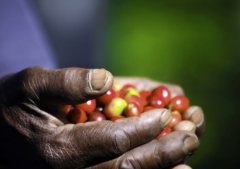
Soft fruit acidity and aroma Java boutique coffee flavor thick Asian Java flavor
When it comes to Asian coffee, the first impression of coffee lovers is often calm and calm. Asian coffee is generally characterized by thick flavor, strong sweetness and round taste, but slightly flat aroma and brightness. It is precisely because of the heavy nature of Asian coffee that it is very suitable to be used as a base when making Italian coffee. Raw coffee beans in Asia are generally processed by wet or semi-wet methods.

Description of Ethiopian Coffee Flavor with soft Fruit Acid an introduction to the characteristics of the varieties in the producing area
60% of the coffee belongs to forest-semi-forest coffee. In such a wild coffee forest, pesticides are not used at all, but biological methods are used to control pests. 35% of the coffee is courtyard coffee. In this kind of coffee garden, the planting is three-dimensional. Coffee is located in the lower layer and gets a suitable growth environment in the shade of other crops. Fertilizers are mainly fallen leaves, withered grass and animal manure. five

A brief introduction to the description of the flavor and aroma characteristics of Tanzanian coffee beans in Africa with soft acidity
Due to political instability and rampant diseases and insect pests, the coffee industry in Tanzania has been damaged, resulting in a decline in the overall level of coffee and instability in quality, which in turn lead to lower prices, which is usually the result of a further decline in the coffee industry. What's more, it is estimated that more than 12% of the Arabica coffee grown in northern Tanzania from 1969 to 1985